Fuse conditions at every node
Each aircraft combines its view of RF conditions, GNSS integrity and neighbouring aircraft state.
Onboard RF + GNSS signal fusion
DAIR is an onboard signal-fusion and mesh layer that combines RF conditions, GNSS integrity and local fleet topology to derive system health, confidence and trust—then gives the ground operator a clear, prioritised view.
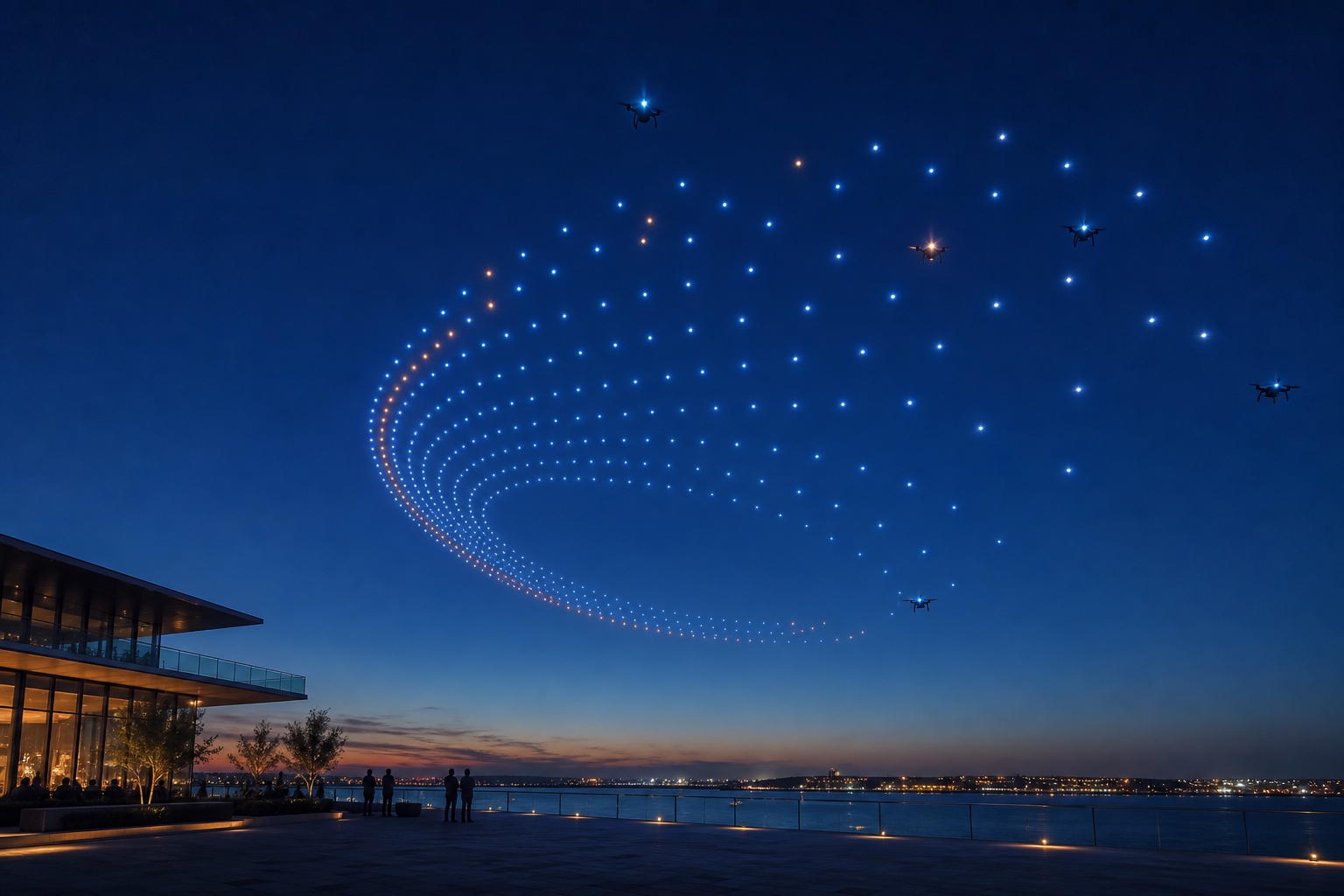
Each aircraft combines its view of RF conditions, GNSS integrity and neighbouring aircraft state.
The mesh uses local topology and shared observations to identify agreement, divergence and emerging degradation.
Derived health and confidence are prioritised into a clear view that supports timely operator decisions.
See the trust layer
A 60-second visual walkthrough of how onboard DAIR nodes combine local observations, establish mesh-wide confidence and surface the system health that warrants operator attention.
Flight depends on trustworthy signals. RF conditions change, GNSS integrity can degrade, and individual aircraft may be affected in different ways. DAIR Passive runs onboard, fusing RF, GNSS and neighbour observations to maintain a shared spatial frame and derive health and trust outside the flight-control loop. When localised interference reaches one section, affected aircraft compare evidence with unaffected neighbours. Alternate mesh paths and bearers help preserve the operator’s command link, while the shared frame supports navigation using the evidence that remains. The operator sees the affected area, disturbance extent and whether the fleet can continue with confidence. DAIR works alongside the GCS; it is not show control. DAIR Passive adds assurance without changing command authority and establishes a foundation for future active resilience.
Mission → operational gap → response
Coordinated drone displays are complex UAS operations. Safe conduct depends on the behaviour of the fleet as a system—not only the telemetry reported by any one aircraft. DAIR makes that system-level health visible by deriving trust where the evidence is created: onboard and across the mesh.
Fleet-level trust should become a routine input to operational risk management, alongside airworthiness, flight planning, weather, site assessment and operating limitations.
RF interference, GNSS degradation and topology changes may be local, transient or correlated. Individual telemetry streams do not always reveal whether an anomaly is isolated, shared or becoming systemic.
DAIR fuses local RF, GNSS and neighbour-state evidence on every aircraft, shares confidence through the mesh and reports a coherent health picture to the ground—supporting earlier recognition, proportionate response and post-flight review.
How it works
DAIR operates as a lightweight onboard layer, transforming distributed observations into fleet-level health without adding another system the pilot has to interpret aircraft by aircraft.
DAIR isn’t show control software. It’s the underlying assurance layer that works alongside your GCS.
Each aircraft hosts a DAIR node close to the signals and system behaviour it is assessing.
RF conditions, GNSS integrity and neighbouring aircraft state are combined into a contextual local assessment.
The mesh compares observations across the fleet to identify consistency, divergence and emerging system-level degradation.
The ground operator receives clear confidence and health indicators, with alerts when the fleet state warrants attention.
Partnerships
DAIR has been developed and exercised through an extensive, advanced simulation harness. We are now looking for partners who can help us evaluate the system on real aircraft, in representative operating environments and against the evidence needs of real-world UAS operations.
Help identify the operational scenarios, assurance evidence and evaluation criteria that matter when moving distributed fleet health from simulation into practice.
Bring representative workflows, venues and flight conditions to structured trials—allowing us to compare simulated behaviour with the realities of rehearsals and live operations.
Evaluate DAIR on representative aircraft and ground-control interfaces, confirming integration assumptions, platform constraints and performance outside the simulation environment.
About DAIR
DAIR brings together experience in autonomous systems, distributed sensing and operational decision support. Our current focus is making system health and trust observable across the rapidly growing drone light show market.
Leadership team

Engineer & PilotFortune 500 VP of Engineering and Airbus A321 airline pilot, bringing engineering leadership and operational aviation perspective to DAIR.

Safety, Security & ComplianceFortune 500 SVP and senior engineer at BAE Systems, bringing safety-critical engineering and large-scale operational leadership to DAIR.

Chief Architect Former Cognizant Softvision Chief Architect with a background across science and engineering, leading DAIR’s onboard signal-fusion and distributed trust architecture.
Let’s talk
Tell us about your role, operating environment or research interest. We are especially keen to hear from teams open to early validation and pilot discussions.
If the form does not load, open the secure HubSpot form .